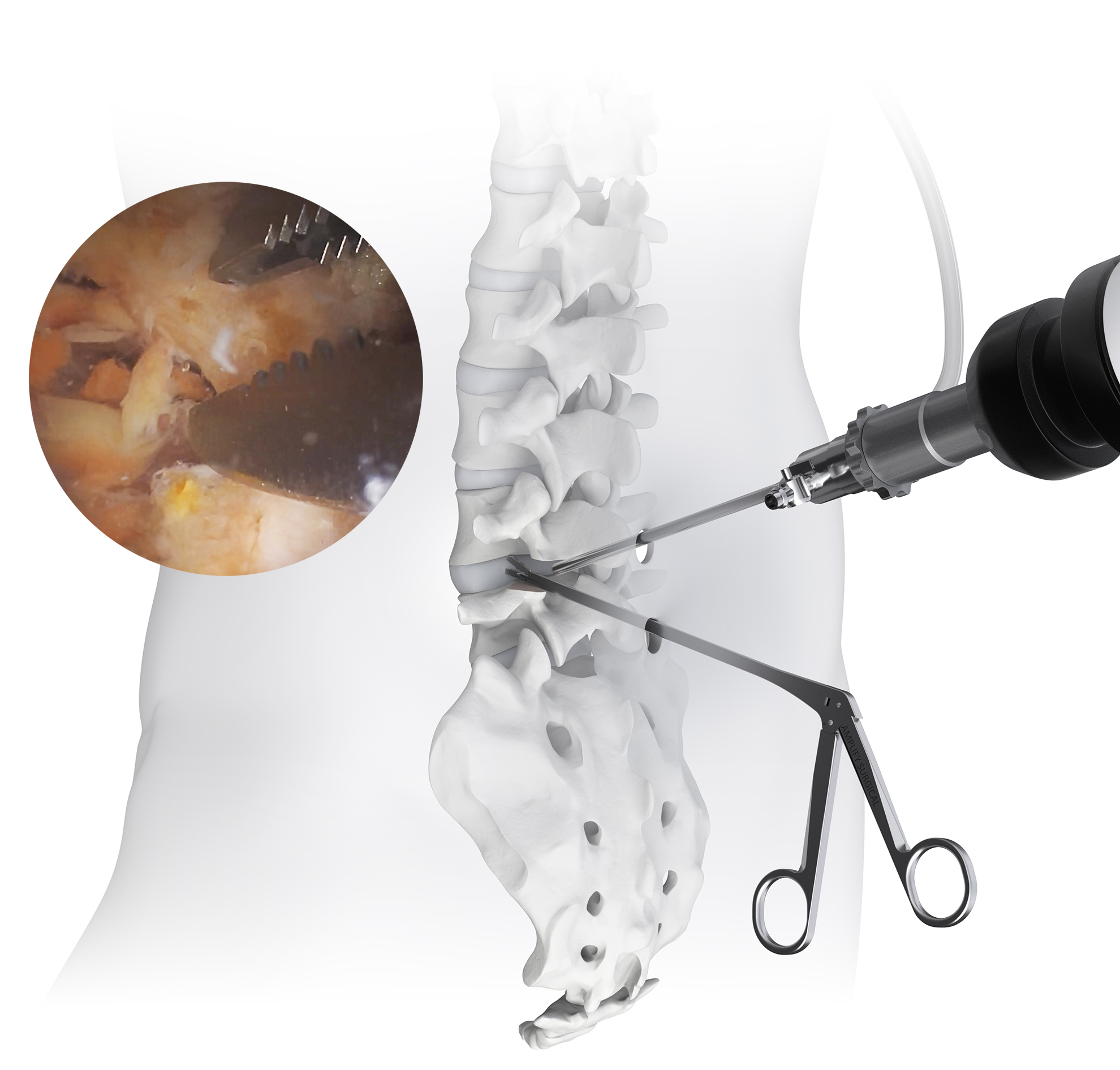
Spine endoscopy is a minimally invasive procedure that uses a tiny camera (endoscope) and specialized instruments to treat conditions causing back and leg pain. This technique is designed to minimize tissue damage and facilitate a quicker recovery compared to open spine surgery.
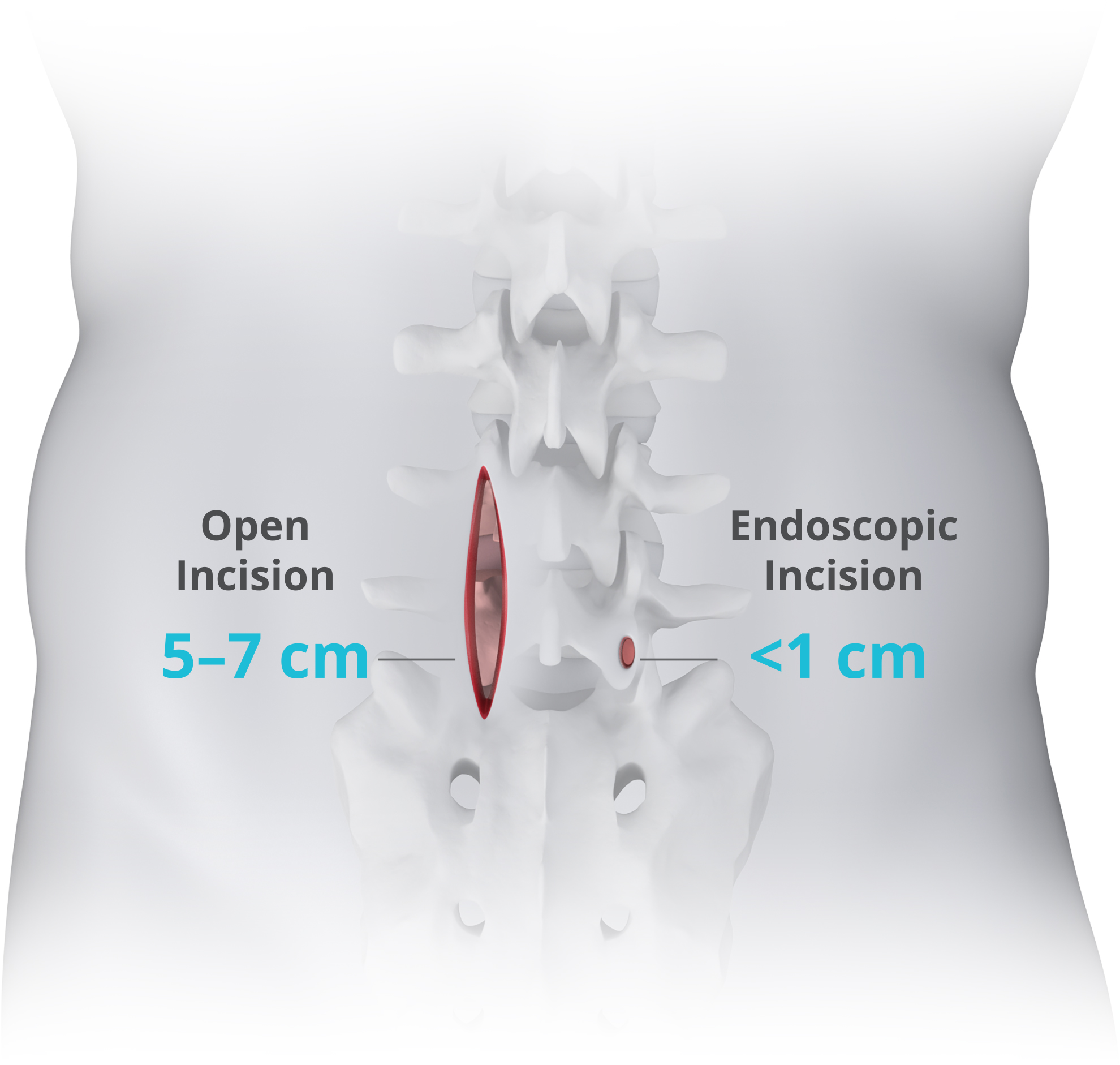
Spine Incision Size Endoscopic vs. Open Surgery
What conditions are treated in endoscopic spine surgery?1
Endoscopic techniques may treat:
Herniated discs
Spinal stenosis
Foraminal narrowing
Sciatica
Nerve compression
Certain degenerative spinal conditions
1 Clinical outcome and complication after biportal spine surgery: a comprehensive systematic review and meta-analysis of 3673 cases Don Y. Park, et al
What are the benefits of endoscopic spine surgery?
Many patients experience:
Smaller incisions
Less tissue disruption
Reduced post-operative pain
Faster recovery
Shorter hospital stay or outpatient option
Enhanced visualization for the surgeon
What happens during surgery?
Typical steps include:
Two tiny incisions
Camera inserted for HD visualization
Instruments inserted through a separate portal
Surgeon relieves nerve compression (or other surgical function)
How long is the recovery?
Many patients can walk the same day and return home within hours. Recovery times vary, but often progress through:
Day 1
Walking
Day 2
Light activity
Day 3
Return to full activity
(varies by each individual)
Results vary by patient, and you should follow your doctor’s recommendations.
Is endoscopic spine surgery right for you?
You may be a candidate if you have persistent back or leg pain, symptoms not improving with conservative care, and imaging results showing a treatable condition.
What is the dualPortal® approach?
The dualPortal technique uses two small portals—one for visualization and one for instruments. This design allows surgeons to see clearly, move efficiently, and treat a broader range of spine conditions.
The dualPortal technique expands minimally invasive spine treatment options, allowing surgeons to address more conditions through smaller incisions.
Not every spine surgery patient is a candidate for endoscopic approach but dualPortal provides more options for surgeons.
This information is not medical advice. Amplify Surgical recommends that surgeons receive appropriate training prior to use of any product. The treating surgeon must rely on their own clinical judgment when determining patient care.
Refer to the Instructions for Use (IFU), product labeling, and package insert before use. Postoperative management is patient-specific and directed by the treating healthcare professional.
Individual outcomes may vary, and not all patients will experience the same results. Product availability may vary by region based on regulatory requirements.