
There are several primary causes of lumbar spine problems. The majority of symptoms are caused by disc, bone, or ligaments pressing onto the nerve roots or spinal cord.
During the natural aging process, the discs between each vertebral body can lose their flexibility, height, or elasticity which can cause discs to herniate, bulge, or leak their gelatinous core.
Spondylolisthesis is a condition where your vertebrae have moved forward or backward. This can lead to a narrowing of the spinal canal, causing pressure on your nerves if left untreated.
Spinal stenosis is the narrowing of the cavity where your spinal cord passes through. The common cause for this is spinal degeneration through age. If untreated, this pressure on your nerves can cause numbness or pain.
Conditions in which one of the vertebrae slips forward or backward can lead to degeneration and narrowing of the spinal canal.

View Anatomy of the Spine
Many symptoms can be treated through methods that involve:
Your physician may suggest spinal surgery if you do not gain relief from non-operative forms of treatment and/or if your symptoms are increasing or worsening.
Transforminal or Posterior Lumbar Interbody Fusion (T/PLIF) is a procedure used to treat problems associated with DDD such as spine instability and deformities.
In this procedure, the surgeon works on the spine from the back (posterior) and removes a spinal disc in the lumbar spine. An interbody fusion implants with bone graft are inserted into the space between the two vertebrae where the disc was removed and supporting fixation is added (screws, plates, etc.).
The goal of the procedure is to stimulate the vertebrae to grow together into one solid bone, a process known as fusion. Fusion creates a rigid and immovable column of bone in the problem section of the spine.
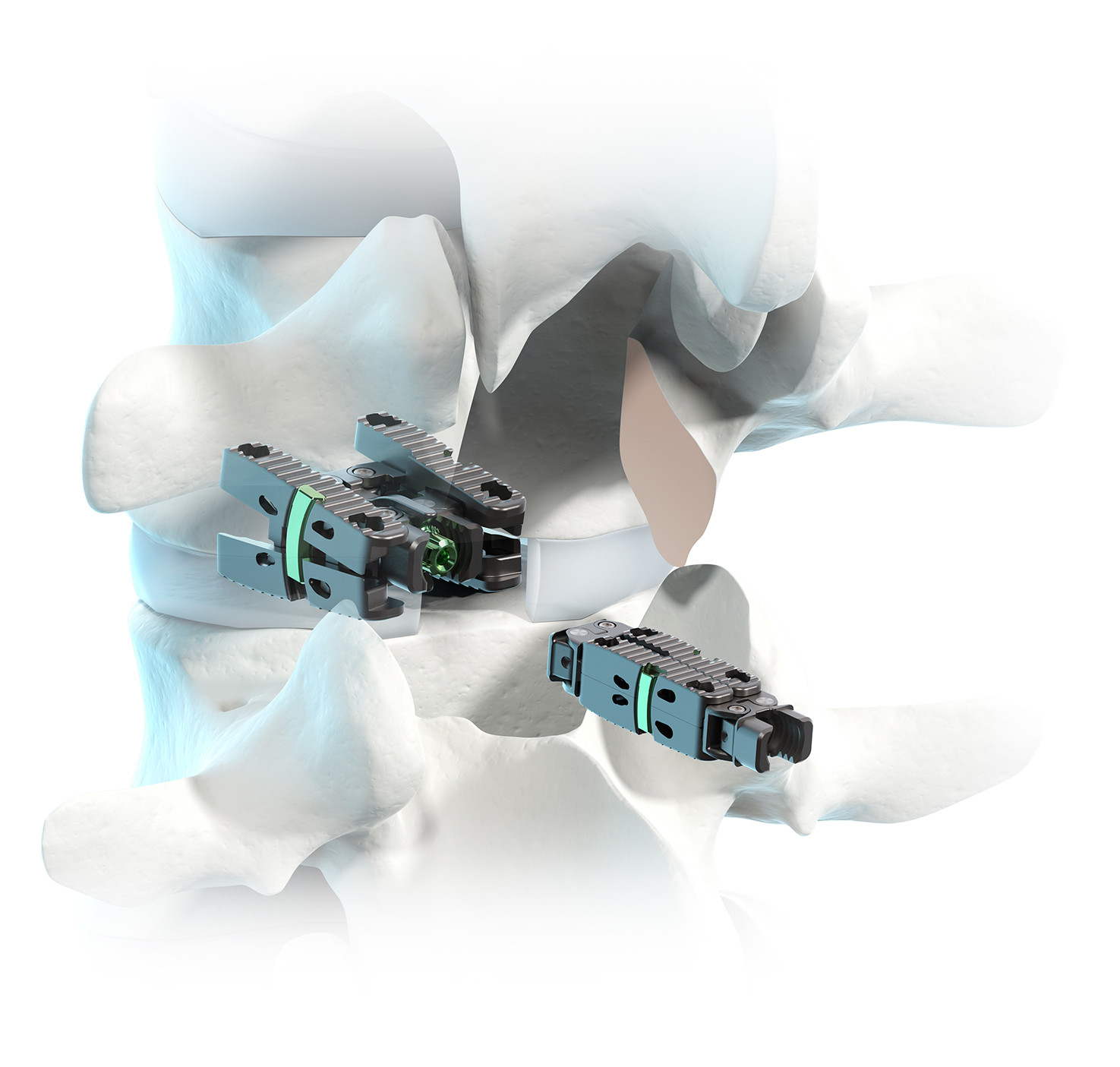
The dualXSlim expandable interbody implant is designed to help restore the natural spacing and alignment of the spine. After it is placed, the implant expands in both height and width to create a larger area of support between the bones of the spine.
This unique design helps provide stability, supports new bone growth for fusion, and allows surgeons to use less invasive surgical approaches that may help reduce the impact of surgery and support recovery.
Your spine surgeon might determine that a T/PLIF procedure is a good option if you:
Your physician will evaluate your condition and consider all treatment options.
If surgery is the best option, your spine surgeon will discuss complications, risks, pre-operative, and post-operative procedures.
An x-ray is taken of your spine to identify the location of the operative disc space.
Through a small incision, the lumbar spine will be accessible from your back.
Disc removal will take place followed by insertion of an interbody fusion implants packed with bone graft.
Pedicle screws and rods are inserted into the vertebral body to stabilize the spine and implants while fusion occurs.
Your surgeon closes the incision and moves you into recovery.
Your physician will determine post-operative procedures and safety guidelines to follow at home.
All surgeries present risks and complications that are important to discuss with your physician prior to your surgery. Listening to your physician’s guidance both before and after surgery will help ensure the best possible outcome from your procedure.
Specific complications associated with the spinal implant procedure include, but are not limited to:
Please contact your physician to discuss all potential risks.
This information is not medical advice. Amplify Surgical recommends that surgeons receive appropriate training prior to use of any product. The treating surgeon must rely on their own clinical judgment when determining patient care. Refer to the Instructions for Use (IFU), product labeling, and package insert before use. Postoperative management is patientspecific and directed by the treating healthcare professional. Individual outcomes may vary, and not all patients will experience the same results. Product availability may vary by region based on regulatory requirements.